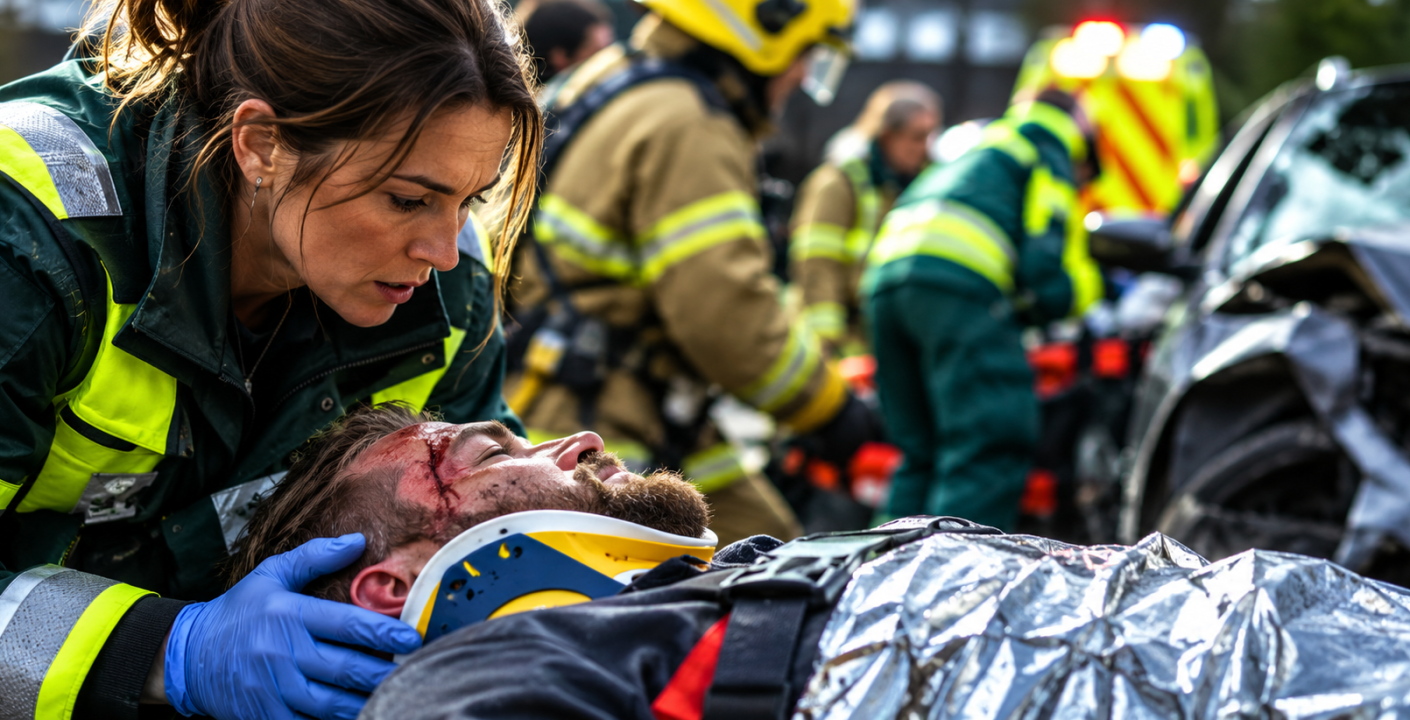
When a serious injury occurs, the actions taken in the first few minutes can make a significant difference. Understanding major trauma, recognising potentially life-threatening injuries and knowing how to respond can help protect lives before professional medical assistance arrives.
Major trauma can happen anywhere. From road traffic collisions and industrial accidents to falls, violent incidents and emergencies in public spaces, serious injuries can occur suddenly and without warning.
While emergency services are trained and equipped to manage these situations, the people first on the scene are often colleagues, members of the public or workplace first aiders.
Having the knowledge, confidence and practical skills to recognise major trauma and respond appropriately can make a vital difference.
What Is Major Trauma?
Major trauma refers to a serious injury, or combination of injuries, that has the potential to cause death, permanent disability or significant long-term health complications.
Unlike minor injuries, such as small cuts, bruises or uncomplicated sprains, major trauma can affect vital organs, compromise breathing, cause severe blood loss or damage critical structures within the body.
Examples of major trauma include:
- Severe head or brain injuries
- Significant chest or abdominal injuries
- Catastrophic bleeding and major blood loss
- Serious spinal injuries
- Multiple or complex fractures
- Traumatic amputations
- Penetrating injuries, including stab wounds
- Severe crush injuries
Major trauma does not always involve multiple injuries. A single serious injury can be life-threatening.
The National Institute for Health and Care Excellence (NICE) recognises major trauma as injuries that may be life-threatening or life-changing, potentially resulting in long-term disability.
What Are the Most Common Causes of Major Trauma?
Major trauma can occur across many different environments and circumstances.
Road Traffic Collisions
High-impact collisions involving cars, motorcycles, cyclists or pedestrians can cause significant internal and external injuries.
These may include severe bleeding, fractures, head injuries and damage to internal organs.
Workplace and Industrial Accidents
Construction sites, manufacturing facilities, warehouses, agricultural environments and other high-risk workplaces can expose employees to serious injury hazards.
Incidents involving heavy machinery, moving vehicles, falls from height or crushing equipment can result in major trauma.
This highlights the importance of workplace-specific risk assessments and appropriate emergency response training.
Falls from Height
Falls from ladders, scaffolding, roofs and elevated working platforms can cause serious injuries, including head trauma, spinal damage and complex fractures.
Even falls from a relatively low height can be serious, particularly for older or medically vulnerable individuals.
Violence and Penetrating Injuries
Knife injuries, gunshot wounds and other violent incidents can cause catastrophic bleeding and significant damage to internal structures.
Recognising serious bleeding and knowing how to provide appropriate first aid can be particularly important while emergency services are responding.
Sporting and Recreational Accidents
High-impact sports, cycling, equestrian activities and outdoor pursuits can result in major injuries.
Although many sporting injuries are minor, serious incidents may involve head trauma, spinal injuries or internal bleeding.
Recognising the Signs of Major Trauma
Not every serious injury is immediately obvious.
Some casualties may have visible wounds or significant bleeding, while others may initially appear relatively stable despite suffering potentially life-threatening internal injuries.
Warning signs can include:
- Severe or uncontrolled bleeding
- Difficulty breathing or abnormal breathing
- Loss of consciousness or reduced responsiveness
- Confusion, disorientation or unusual behaviour following an injury
- Severe pain or obvious deformity
- Pale, cold or clammy skin
- Signs of shock, such as weakness, rapid breathing or collapse
- Serious injuries to the head, chest, abdomen or pelvis
A casualty’s condition can deteriorate rapidly. The absence of obvious external injuries does not necessarily mean that a person is safe.
If major trauma is suspected, call 999 immediately.
Why Are the First Few Minutes So Important?
Following a major traumatic injury, time is critical.
Severe bleeding can reduce the amount of oxygen reaching vital organs. Serious chest injuries may interfere with breathing, while head injuries can affect consciousness and neurological function.
Early recognition, appropriate first aid and rapid access to emergency medical treatment can improve a casualty’s chances of survival.
The period before professional help arrives is therefore extremely important.
People who have received suitable training may be better prepared to recognise immediate threats, communicate effectively with emergency services and provide appropriate interventions within the limits of their competence.
The objective is not to replace paramedics or other medical professionals.
It is to provide potentially life-saving assistance until specialist care becomes available.
How Should You Respond to a Major Trauma Incident?
When faced with a serious injury, it is important to remain as calm as possible and prioritise safety.
The following principles provide general guidance, although practical trauma management should always be supported by appropriate training.
1. Ensure the Scene Is Safe
Before approaching a casualty, assess the surrounding environment.
Consider hazards such as moving vehicles, machinery, electricity, fire, unstable structures or ongoing violence.
Do not place yourself or others in unnecessary danger.
2. Contact Emergency Services
Call 999 immediately if major trauma is suspected.
Provide clear information about the location, nature of the incident, number of casualties and any obvious life-threatening injuries.
Follow the emergency call handler’s instructions.
3. Identify Immediate Life Threats
Look for catastrophic bleeding, unresponsiveness and abnormal breathing.
Trained responders may use a structured assessment approach to identify and prioritise serious problems.
The professional trauma assessment framework often includes catastrophic haemorrhage, airway, breathing, circulation, disability and exposure, commonly described as the <C>ABCDE approach.
4. Provide Appropriate First Aid
Depending on the casualty’s condition and your training, this may include:
- Applying firm, direct pressure to severe external bleeding
- Using appropriate bleeding-control equipment when indicated and within your training
- Following CPR and AED guidance if the casualty is unresponsive and not breathing normally
- Avoiding unnecessary movement, particularly where spinal injury is suspected
- Keeping the casualty warm and monitoring their condition
Continue to follow the emergency call handler’s instructions until professional assistance arrives.
5. Communicate Clearly With Emergency Responders
When emergency services arrive, provide a concise handover.
Explain what happened, what injuries you observed, whether the casualty’s condition changed and what first aid was provided.
Clear communication can help the responding team make informed decisions.
What Is the Difference Between First Aid and Trauma Training?
Traditional first aid training provides essential knowledge for managing a range of common medical emergencies and injuries.
However, some workplaces and operational environments present risks that require additional, more specialised preparation.
Trauma training can build upon existing first aid knowledge by focusing on the recognition and initial management of serious, potentially life-threatening injuries.
Depending on the course and the learner’s role, training may include:
- Catastrophic haemorrhage recognition and control
- Appropriate use of tourniquets
- Specialist trauma dressings and equipment
- Recognition of serious chest injuries
- Structured casualty assessment
- Emergency communication and casualty handover
- Scenario-based response to high-risk incidents
Importantly, training should reflect the hazards, responsibilities and likely incidents within a particular working environment.
A construction worker, security professional, healthcare employee and event responder may face very different emergency scenarios.
This is why industry-specific trauma training can provide significant value.
Why Should Organisations Consider Trauma Training?
For employers, emergency preparedness should extend beyond simply meeting minimum requirements.
A workplace first aid needs assessment should consider the risks employees may face, the nature of the working environment and how quickly professional medical assistance could arrive.
Organisations operating in higher-risk environments may benefit from additional trauma training and specialist equipment.
This could include businesses involved in:
- Construction and engineering
- Manufacturing and heavy industry
- Security and protective services
- Transport and logistics
- Events and entertainment
- Remote or isolated operations
- Emergency and healthcare services
Training employees to recognise serious injuries and respond appropriately can help organisations develop a more confident, capable and prepared workforce.
It also supports a broader culture of safety, responsibility and proactive risk management.
The Importance of Realistic, Scenario-Based Training
Understanding the theory behind trauma management is important, but applying that knowledge during a real emergency can be challenging.
Stress, noise, environmental hazards and the emotional impact of witnessing a serious injury can all affect decision-making.
Realistic, scenario-based training allows learners to practise their responses in a controlled environment.
By working through practical situations, participants can develop familiarity with equipment, improve communication and build confidence in recognising and responding to serious injuries.
Effective training is not simply about remembering information.
It is about developing the skills and confidence to take appropriate action when it matters.
Building Confidence Through Specialist Trauma Training
At Medical & Mental Trauma Services (MMTS Global), we recognise that no two working environments present exactly the same risks.
Our approach to medical and trauma training focuses on developing practical knowledge, real-world awareness and the confidence to respond appropriately when emergencies occur.
Through industry-specific training, organisations can better prepare their teams for the types of incidents they may realistically encounter.
Whether supporting workplace first aiders, emergency responders, security personnel or organisations operating in higher-risk environments, our focus is on meaningful, practical learning.
Because when a serious injury occurs, preparation matters.
Take the Next Step Towards Better Emergency Preparedness
Major trauma can occur without warning, but organisations can take proactive steps to improve their readiness.
Understanding the risks, providing suitable training and ensuring appropriate emergency procedures are in place can make a significant difference.
Looking to improve your organisation’s trauma response capabilities?
Explore MMTS Global’s specialist medical and trauma training solutions, or contact our team to discuss training tailored to your workplace, industry and operational requirements.
Contact MMTS Global: info@mmtsglobal.co.uk
Medical disclaimer: This article provides general educational information and is not a substitute for accredited practical training, professional medical advice or emergency services guidance. In a suspected life-threatening emergency in the UK, call 999 immediately.