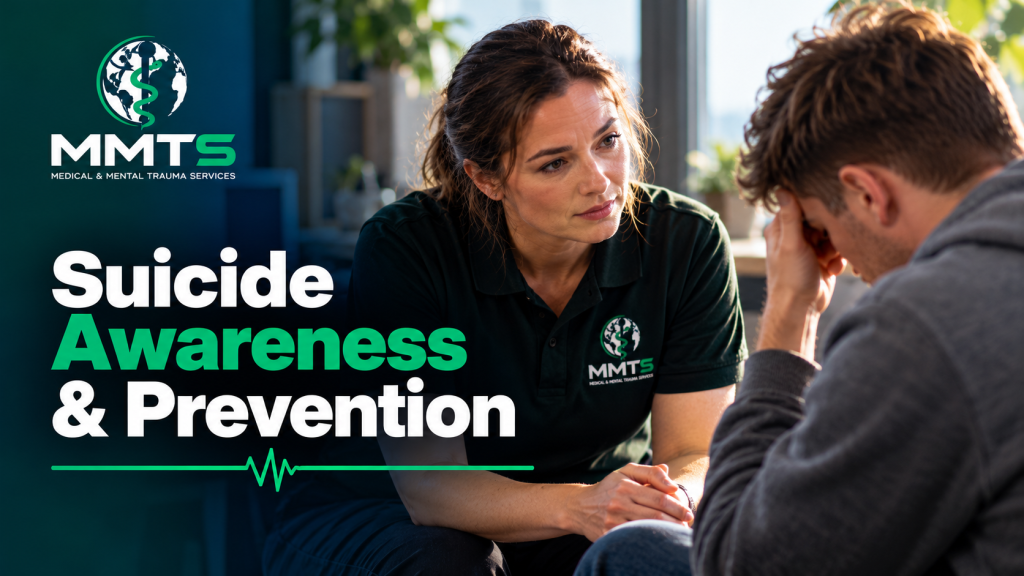
Suicide Awareness and Prevention
Level 2 (RQF)
From £160 +VAT per person
Our Suicide Awareness and Prevention Level 2 (RQF) course provides essential knowledge to help individuals recognise possible signs of suicidal distress and respond appropriately. The course covers risk factors, warning signs, supportive conversations, suicide prevention and accessing professional support. Suitable for employees, managers, community workers and anyone wishing to improve their awareness, the training leads to a nationally recognised Qualsafe qualification.
Explore Our Courses
Course details.
Course information
Our Suicide Awareness and Prevention Level 2 (RQF) course provides delegates with the knowledge and confidence needed to recognise signs that someone may be experiencing suicidal thoughts and understand how to respond appropriately.
This course is suitable for anyone who wants to improve their understanding of suicide awareness and prevention, including employees, managers, community workers, volunteers and those supporting people who may be experiencing emotional distress.
Delegates will learn about the factors that can contribute to suicidal thoughts, how to recognise possible warning signs and the importance of approaching sensitive conversations with care and understanding.
The course also covers how to listen without judgement, ask appropriate questions, respond to concerns about suicide and help individuals access professional support.
Training includes discussions, practical examples and realistic scenarios to help delegates develop the confidence to offer initial support while recognising their own responsibilities and limitations.
Successful completion leads to the nationally recognised Qualsafe Level 2 Award in Suicide Awareness and Prevention (RQF).
This qualification helps individuals and organisations improve suicide awareness, reduce stigma and encourage a supportive approach to mental health and suicide prevention.
By the end of this course, you will be able to:
Understand suicide awareness and the importance of prevention.
Recognise common myths and misconceptions surrounding suicide.
Understand factors that may contribute to suicidal thoughts and behaviours.
Recognise possible warning signs that someone may be experiencing suicidal thoughts.
Identify changes in behaviour, communication and emotional wellbeing.
Understand how stigma can prevent individuals from seeking help.
Approach sensitive conversations with confidence and understanding.
Ask direct and appropriate questions when concerned about someone’s safety.
Use active listening skills and respond without judgement.
Recognise situations where urgent professional assistance may be required.
Understand appropriate actions to take when someone may be at immediate risk.
Identify professional and community support services.
Encourage individuals to access appropriate support.
Understand the importance of confidentiality and personal boundaries.
Recognise the emotional impact of supporting someone experiencing suicidal thoughts.
Help promote suicide awareness and prevention within workplaces and communities.
This course is suitable for anyone who wants to develop their understanding of suicide awareness and prevention and learn how to recognise and respond to signs of suicidal distress.
It is particularly suitable for:
Managers, supervisors and team leaders.
Human resources and employee wellbeing staff.
Workplace mental health first aiders.
Healthcare and social care support workers.
Teachers, teaching assistants and education staff.
Youth workers and community support staff.
Charity workers and volunteers.
Emergency services and first responders.
Security and public-facing employees.
Hospitality, retail and customer service staff.
Sports coaches and activity leaders.
Individuals supporting vulnerable people.
Anyone wishing to improve their knowledge of suicide awareness and prevention.
No previous mental health or suicide prevention training is required.
1 Day
Classroom: One full day of face-to-face training.
Classroom training
Certificate Validity: 3 years.
Delegates will have access to the learning resources needed to complete the course, which may include:
Instructor-led suicide awareness and prevention training.
Learning materials covering suicide risk factors and warning signs.
Guidance on recognising and responding to suicidal distress.
Practical examples and realistic case studies.
Group discussions and communication exercises.
Information about professional mental health and suicide prevention services.
Guidance on supportive conversations and appropriate responses.
Resources covering confidentiality, personal boundaries and wellbeing.
Required course assessments and knowledge checks.
Qualsafe Level 2 Award in Suicide Awareness and Prevention (RQF) certificate upon successful completion.
Entry Requirements
No previous mental health or suicide prevention qualification is required.
Delegates must meet the minimum age requirements set by Qualsafe.
A suitable understanding of spoken and written English is required to follow the training and complete assessments.
Delegates should be willing to participate in learning activities, discussions and assessments.
Before Attending
Please arrive on time and attend the full training session.
Delegates should be prepared to take part in discussions and activities relating to suicide awareness and prevention.
The course includes sensitive subjects such as suicide, suicidal thoughts and emotional distress, which some delegates may find upsetting.
Delegates are not expected to share personal experiences or discuss their own mental health.
Please inform us in advance of any additional learning needs or accessibility requirements so suitable arrangements can be considered.
All required learning activities and assessments must be completed to achieve the qualification.
Course Assessments
Delegates will complete the assessments required by Qualsafe to demonstrate their understanding of suicide awareness and prevention.
Certification
Upon successful completion, delegates will receive the nationally recognised Qualsafe Level 2 Award in Suicide Awareness and Prevention (RQF).
Important Information
This course provides awareness and knowledge of suicide prevention. It does not qualify delegates to diagnose mental health conditions, provide counselling or carry out clinical suicide risk assessments.
The training focuses on recognising concerns, providing appropriate initial support and helping individuals access professional assistance when needed.
Course content
Lesson 1.1 – Understanding suicide and suicidal thoughts
Lesson 1.2 – Common myths and misconceptions about suicide
Lesson 1.3 – Understanding the impact of stigma
Lesson 1.4 – The importance of suicide awareness and prevention
Lesson 2.1 – Factors that may contribute to suicidal thoughts
Lesson 2.2 – Understanding emotional distress and mental health difficulties
Lesson 2.3 – Recognising life events and circumstances that may increase risk
Lesson 2.4 – Understanding protective factors and sources of support
Lesson 3.1 – Recognising possible signs of suicidal thoughts
Lesson 3.2 – Identifying changes in behaviour and communication
Lesson 3.3 – Understanding verbal and non-verbal warning signs
Lesson 3.4 – Knowing when immediate support may be needed
Lesson 4.1 – Approaching someone who may be experiencing suicidal thoughts
Lesson 4.2 – Asking direct and appropriate questions about suicide
Lesson 4.3 – Using active listening and responding without judgement
Lesson 4.4 – Providing reassurance and encouraging open conversations
Lesson 4.5 – Understanding confidentiality and personal boundaries
Lesson 5.1 – Recognising when someone may be at immediate risk
Lesson 5.2 – Taking appropriate action to help keep someone safe
Lesson 5.3 – Understanding when to contact emergency services
Lesson 5.4 – Involving appropriate professionals and support services
Lesson 6.1 – Understanding approaches to suicide prevention
Lesson 6.2 – Identifying professional and community support services
Lesson 6.3 – Encouraging individuals to seek appropriate help
Lesson 6.4 – Understanding the importance of ongoing support
Lesson 7.1 – Understanding the emotional impact of supporting someone at risk
Lesson 7.2 – Maintaining appropriate boundaries
Lesson 7.3 – Recognising the importance of personal wellbeing
Lesson 7.4 – Knowing when to seek support for yourself
Lesson 8.1 – Reviewing suicide awareness and prevention principles
Lesson 8.2 – Applying knowledge to realistic scenarios
Lesson 8.3 – Understanding appropriate responses and support pathways
Lesson 8.4 – Completing the required qualification assessment
Book your course today.
Whether you’re ready and know what you want or whether you have a custom requirement MMTS can probably help. Tell us about your organisation, where you operate and the challenges your people face.
Our team can help meet your requirements